Which VALORANT Champions Shanghai group stage format works better for viewers and why the Day 2 broadcast settles it
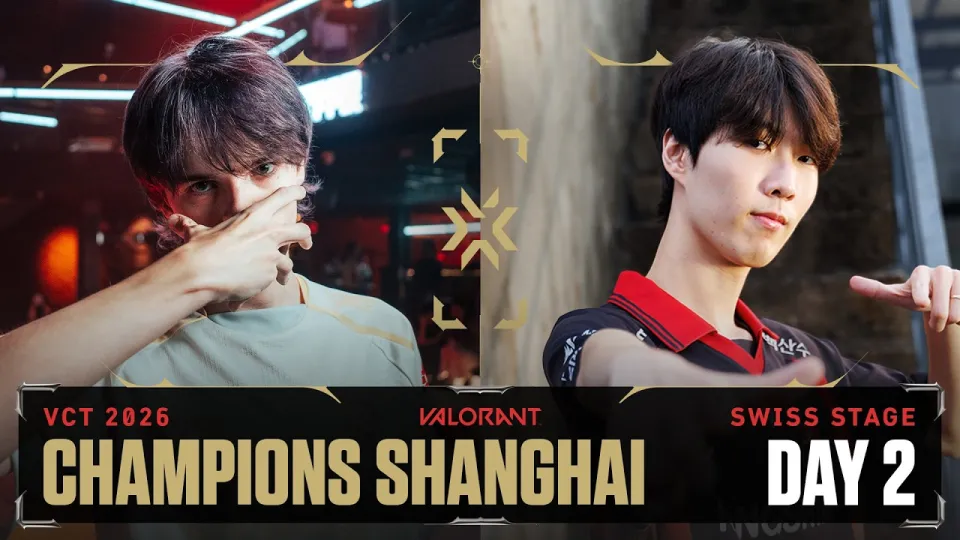
Video: VALORANT Champions Shanghai — Group Stage — Day 2
Want articles like this for your own video to promote it on YouTube and Google? Order them through the Telegram bot @sat_sit_bot. It writes articles around your video, embeds the video and publishes them on popular niche websites (no ads). Your first 50 articles are free.
VALORANT Champions Shanghai is the 2026 world championship, and its group stage is the part of the calendar that decides whether the tournament's 16-team field feels earned or inflated. Day 2, broadcast by the VALORANT Champions Tour, is the clearest test case for that question: it packs multiple best-of-three series from all four regions into one stream, and the official social channels at VALORANT Esports on X carry the schedules, results and clips that frame every match. If you want the short answer, the group stage format works best when you watch it as a single continuous block rather than match by match, because the seeding logic only becomes readable once you see how CN, Pacific, EMEA and Americas teams trade maps inside the same day.
What the VALORANT Champions Shanghai group stage actually is
The group stage is the first phase of a 16-team world championship, and it exists to cut that field down before the playoff bracket begins. Shanghai hosts the full event from September 24 to October 18, with representatives from four competitive regions: Americas, CN, EMEA and Pacific. Each region sends multiple seeds, and the group phase is where those seeds are sorted into upper and lower paths. In practice that means every Day 2 series carries double weight: a win protects your bracket position, a loss forces you into elimination risk much earlier than the playoff stage would. The format rewards teams that can adapt across maps rather than teams that own a single comfort pick, which is exactly why the best-of-three structure is the right call for a stage this short.
How Day 2 was structured on stream
The Day 2 broadcast followed the standard VCT production pattern, and knowing the order helps you watch it efficiently. The stream opened with the earliest series of the day and rolled through consecutive matches without long dead air, using analyst segments between maps to reset context. A spoiler-blocker comment pinned at the top of the video pointed viewers to timestamps in the replies, which is the practical way to navigate a multi-hour VOD if you cannot watch live. The result is a broadcast that works both as appointment viewing and as an archive: you can jump straight to a decider map, or watch the whole block to follow how the day's results changed the group standings. Production also leaned on translated player interviews, a detail that split the audience between people who wanted the context and people who found the translation lag disruptive.
Why the four-region field is the real story
Sixteen teams from four regions is the core design choice behind this championship, and it shapes every debate around the group stage. The argument for it is straightforward: a world championship should represent the world, and CN, Pacific, EMEA and Americas each bring distinct meta reads, agent pools and pace of play. The argument against it shows up when group matches are lopsided, because viewers start asking whether certain regions are being given slots they have not earned on international results. That tension is not new to VALORANT esports, and it is not unique to Shanghai, but a 16-team group stage makes it visible in a way that a smaller invitational would not. The honest read is that the format is doing its job: it gives emerging regions a real sample size against top opposition instead of a single elimination coin flip.
The viewer debates that Day 2 revived
Day 2 re-triggered three recurring arguments in the VALORANT community, and each one is worth separating from the noise. First, slot allocation: whether CN should hold four seeds or whether those slots should be folded into Pacific so that the strongest Pacific teams qualify instead. Second, competitive balance: jokes about mismatched skill levels appear whenever a group series ends quickly, and they usually say more about seeding than about the losing region. Third, broadcast pacing: a day that resolves fast can feel like a speedrun to some viewers and like efficient scheduling to others. None of these debates has a clean answer, but they all point at the same thing, which is that a group stage is judged by how well it produces meaningful playoff seeding, not by how many maps it produces.
How to watch the group stage without spoilers
If you are catching up on VALORANT Champions Shanghai after the fact, a short routine keeps the experience intact.
- Open the Day 2 VOD and read only the pinned spoiler-blocker comment, which points to timestamps in the replies rather than the score.
- Pick the series you care about by team, not by result, and jump to that timestamp block.
- Watch the decider maps first if you are short on time; they carry the seeding consequences.
- Cross-check the bracket implications on the official VALORANT Esports channels after you finish, not before.
- Avoid comment sections until you are done, since score spoilers land there within minutes of a series ending.
This approach also makes the group stage easier to evaluate, because you see the map-level adjustments instead of just the final scoreline.
What to take from the group stage into the playoffs
The group stage matters because of what it reveals about the teams that survive it. A roster that wins a best-of-three on a map it does not normally pick is showing playoff-ready flexibility. A roster that wins only on its comfort map is showing a ceiling that better teams will exploit in a longer series. Shanghai's schedule, running from September 24 to October 18, gives the surviving teams a short window to fix those weaknesses, and the group stage is where the evidence gets collected. That is the practical reason to watch Day 2 rather than skipping to the bracket: the seeding and the map pools established here determine which side of the bracket a contender lands on.
Useful links
- VALORANT Esports on X
- https://www.facebook.com/ValorantEsports/
- https://www.instagram.com/valorantesports/
- https://www.tiktok.com/@valorantesports
- https://www.twitch.tv/valorant
Final take
VALORANT Champions Shanghai's group stage is best understood as a seeding engine, not a highlight reel, and Day 2 is a good example of a broadcast that has to serve both purposes at once. The 16-team, four-region field creates real debate about slot allocation, but it also guarantees that every region gets a measurable sample against top opposition before the bracket locks. If you want to follow the results, schedules and clips as they land, the fastest route is VALORANT Esports on X, where the official VALORANT Champions Tour account posts updates throughout the event. Watch the decider maps, track the seeding, and treat the comment-section arguments as what they are: a sign that the format is generating stakes people care about.
Key takeaways
- VALORANT Champions Shanghai runs September 24 to October 18 with 16 teams from Americas, CN, EMEA and Pacific.
- Group Stage Day 2 aired September 25 on the VALORANT Champions Tour channel.
- Riot's 2026 partner roster includes AWS, Coinbase, EWC, ENC, Globant, HyperX, Mastercard, OnePlus, Red Bull, Secretlab and Verizon.
- The broadcast ran a spoiler-blocker comment with timestamps in the replies to protect viewers watching on delay.
- Viewer debate after Day 2 focused on CN's four slots, region depth and the gap between top and bottom group seeds.
Questions & answers
How many teams play in the VALORANT Champions Shanghai group stage?
Sixteen teams qualify for the event, drawn from four regions: Americas, CN, EMEA and Pacific. They are split into groups for the opening phase, and the group stage results determine seeding into the playoff bracket. The full event runs from September 24 to October 18.
Why do viewers argue about CN getting four slots?
The complaint is that a four-slot region can send teams that struggle against top opposition, which makes some group matches lopsided. The counter-argument is that a world championship needs broad regional representation and that a larger sample is the only fair way to measure a region's real level. Both positions show up whenever a group day ends quickly.
Is it worth watching the full Day 2 VOD or just the highlights?
Watch the full VOD if you care about seeding and map pools, because the between-map adjustments are where the useful information lives. Highlights only show the outcome, not the draft decisions and mid-round calls that explain it. If time is short, start with the decider maps and work backwards.
How do you avoid spoilers when catching up on the group stage?
Use the spoiler-blocker comment pinned on the broadcast, which links to timestamps in the replies instead of revealing scores. Pick series by team name rather than by result, and stay out of comment sections until you have finished watching. Official channel posts and news pages will confirm bracket implications after you are done.
Source: VALORANT Champions Shanghai — Group Stage — Day 2 · Markdown version